I’ve been raising puppies my whole life. My dad was a dog trainer and breeder of hunting dogs, and at the age of 14, I raised my first litter from birth until they were ready for new homes. I remember watching their eyes open at two weeks, introducing them to food at four weeks, and giving them their first vaccinations. I even had the joy of showing them off when they were old enough to go to their forever families.
As I grew older, though, I began to see things differently. Once I became an adult and had time to reflect, I realized the incredible responsibility that comes with breeding dogs the right way — and the lifelong impact that improper breeding can have on dogs and the people who love them. That’s when my focus shifted from breeding to training and rescuing dogs.
Still, I’ve always loved having a puppy in my life, and I will have one again, again and again — but only when my household is fully prepared.
This is Josie, she was born 12/14/23. She is the most recent puppy I brought into my home. I drove all the way to Texas from Pennsylvania to pick her up. It just so happens the breeder that I trust lives that far away. But it was worth it because Josie is our bestest baby.

A Puppy Should Never Be an Impulse Decision
It is not recommended to bring home a puppy on impulse. It should be a thoughtful, planned process. (Sometimes we can’t help it when the dog find us, myself included.)
Christmas time is a perfect example. Every year, many people go out and buy puppies as gifts without truly considering whether they’re prepared. By January and February, shelters and rescues are overwhelmed with surrendered puppies, and my training schedule becomes almost unmanageable in February and March with families who simply weren’t ready for the “puppy craziness.”
I’m not saying don’t get a puppy around Christmas time — I’m saying think it through, prepare yourself, and be ready for it. Puppies are not seasonal surprises; they’re lifelong commitments.
It’s also important to be home with your puppy during the first few days so they’re not left alone for long periods of time. Don’t plan vacations or trips right after bringing your new puppy home. Those first couple of weeks are essential for bonding, building trust, and helping your new family member feel safe and secure.
Step One: Educate Yourself
Before you even think about which puppy to bring home, start by educating yourself. Puppy care and training continue to evolve as science helps us better understand canine behavior, emotions, and learning.
From what to feed your puppy to how to socialize and train them, new information emerges all the time. A responsible dog parent stays curious, open-minded, and dedicated to learning humane, evidence-based ways to raise a happy, confident dog. Did you know the most critical window for socializing your puppy is between 3 and 14 weeks of age? During this time, puppies are learning what’s safe, what’s scary, and how to navigate the world with confidence. Because they spend much of that period with their breeder or rescue, new puppy parents have only a short time to make the most of it. Proper socialization doesn’t just mean exposing your puppy to new things — it means making sure every new experience is positive, gentle, and at your puppy’s comfort level. This period is crucial because it sets your puppy’s opinion of the world for the rest of their life. Understanding how to socialize your puppy correctly during this small but powerful window can make all the difference in their lifelong behavior and emotional well-being.
Step Two: Prepare Your Home
Before your puppy ever sets paw inside your home, it’s time to get things ready. Preparation goes far beyond cute toys and a comfy bed — it’s about creating structure, safety, and consistency from day one.
Here’s a short checklist to get you started:
-
 Set up a crate: Choose an appropriate size and make it a cozy, positive space — never a punishment. Your puppy should be able to walk in easily, turn around in a full circle, and lie down comfortably without touching the sides. If needed, I recommend getting more then one crate so you can have one in the bedroom, living area.
-
 Buy food and bowls: Ask your breeder, rescue, or veterinarian what your puppy has been eating to make a smooth transition. Bowls
-
 Gather toys: Choose safe chew toys and a few puzzle toys to engage their mind and relieve teething discomfort.
-
 Find a veterinarian: Call to schedule your puppy’s first wellness visit before they come home so there’s availability to bring them in during their first week with you.
-
 Find a trainer or behavior consultant: Look for one who uses positive reinforcement and force-free methods — not just for puppies, but for the entire life of your dog. Plan to have your trainer or behavior consultant come within the first 24–48 hours after your puppy arrives to review your setup and get you started on the right path.
-
 Walker/Sitter/Groomer: Make sure anyone caring for your dog is committed to force-free, compassionate handling, especially since they’ll often be responsible for your dog when you’re not home.
-
 Establish house rules: Discuss with family members where the puppy can go, what furniture rules will be, and who is responsible for feeding, walks, and training.
Step Three: Plan Ahead for Training and Support
After reading this blog, if you feel getting a puppy is the right fit for your home, the next step is to decide what kind of puppy fits your lifestyle and start researching responsible sources.
Once you know when your puppy is coming home, reach out to your trainer or behavior consultant to schedule your first session. My most successful and happiest puppy families are the ones who had me come within the first 24–48 hours after their puppy arrived. This early visit allows me to check their setup, answer questions, and show them what to start working on right away.
You might be surprised to learn that I don’t recommend starting with the traditional “sit, down, come” behaviors in those first few days. There’s already so much your puppy is learning — adjusting to a new environment, developing routines, and forming relationships. Focusing on early bonding, confidence building, and gentle structure sets the stage for a lifetime of learning.
Final Thoughts
Bringing home a puppy can be one of the most joyful experiences you’ll ever have — but only if it’s done thoughtfully and with preparation. Take the time to learn, plan, and set your puppy up for success before they even arrive.
The more prepared you are, the smoother the transition will be for both you and your new best friend. Puppies are not just adorable; they are a long-term responsibility and a lifetime of love waiting to happen.
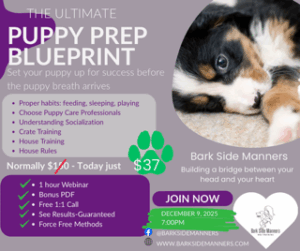
The holidays are coming! if a puppy is on your wish list, don’t wait until they arrive to get ready. My Puppy Prep Blueprint Online Mini Course gives you everything you need to prepare your home, your family and yourself for a smooth, joyful start. Take the impulse out of it-and step into puppy parenthood prepared ad confident. If you are reading this blog and want to sign up for the mini course, just email or private message me the code word Puppy Breath, for a $10 discount.
Contact us at
email: info@barksidemanners.com
DM: @barksidemanners